
Archlutes can have bass string lengths of 1.4m, but this lute has a relatively modest 960mm, and the short (fingerboard) scale length is 640mm.
In these images the gluing surfaces have been planed perfectly flat, and the screw holes can be seen in both the neck and the neck block in the body. The initial shaping of the neck has been started by planing two facets into the neck blank.
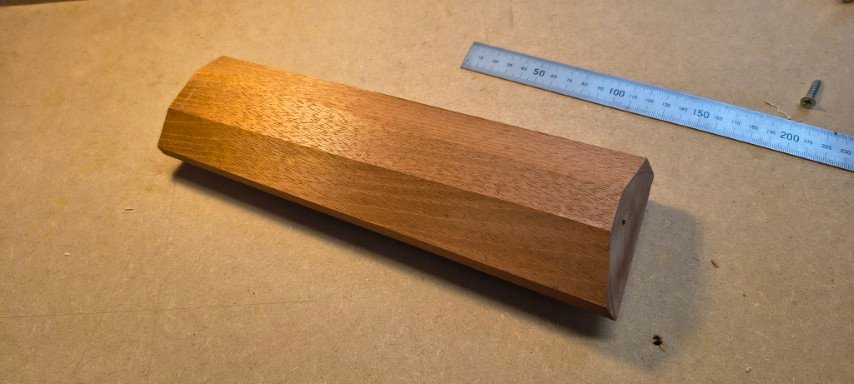
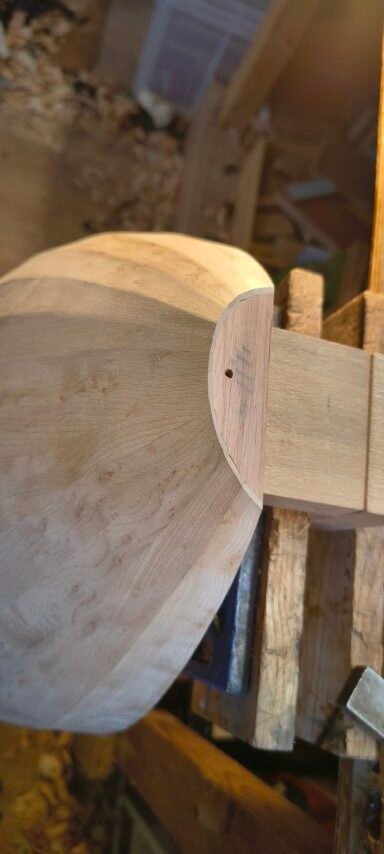
The neck is made from some really nice mahogany that I recovered from a door I found in a skip a few years ago. Here the shaping of the neck is complete. A block of wood has been temporarily screwed to the neck to aid clamping while the shaping is done.
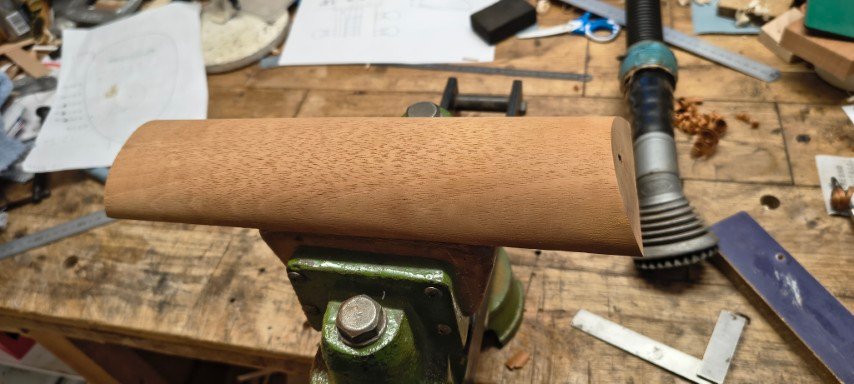
Although screws are used in the joint, the gluing is critical. Hide glue is used, and the end-grain of the neck needs to be sized with thin glue before gluing the two parts together. I’ve done a few repairs recently where this joint has failed, and although the screw stops the neck coming away completely, once the glue joint has failed there is enough movement that the neck pulls up under string tension, and the lute becomes unplayable. It is therefore really important to do this job well!
The extension is maple, and here the block that forms the extension peg box is being glued. As this archlute has only 14 strings rather than the traditional 27, the peg box doesn’t have to be as large.
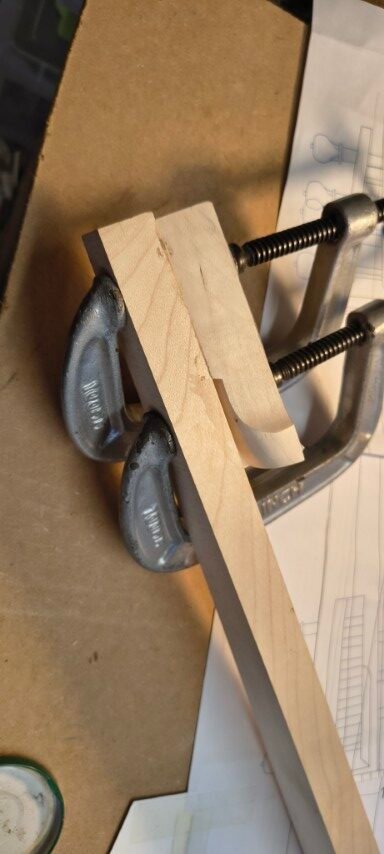
Here most of the carving of the peg boxes is complete, but the peg holes have yet to be drilled and reamed.
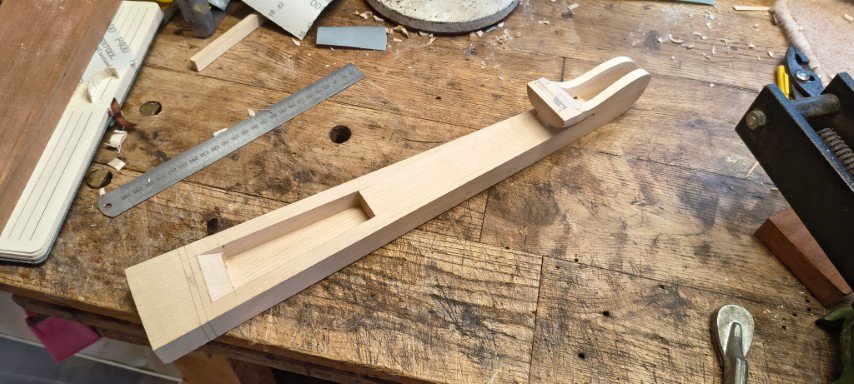
As with the neck to body joint, the joint between the neck and the extension is glued and screwed in the traditional way.
Next post will see the soundboard, body and neck assembled.